Everyday
On the street, on a terrace or behind the wheel, what counts is a balanced tint that calms brightness, keeps colours true and stays comfortable for hours.

LIGHT, CONSIDERED.
Sunglasses change more than brightness. They frame your view, shape contrast and accompany your face through changing light. That is why shape, tint and protection have to be considered together.
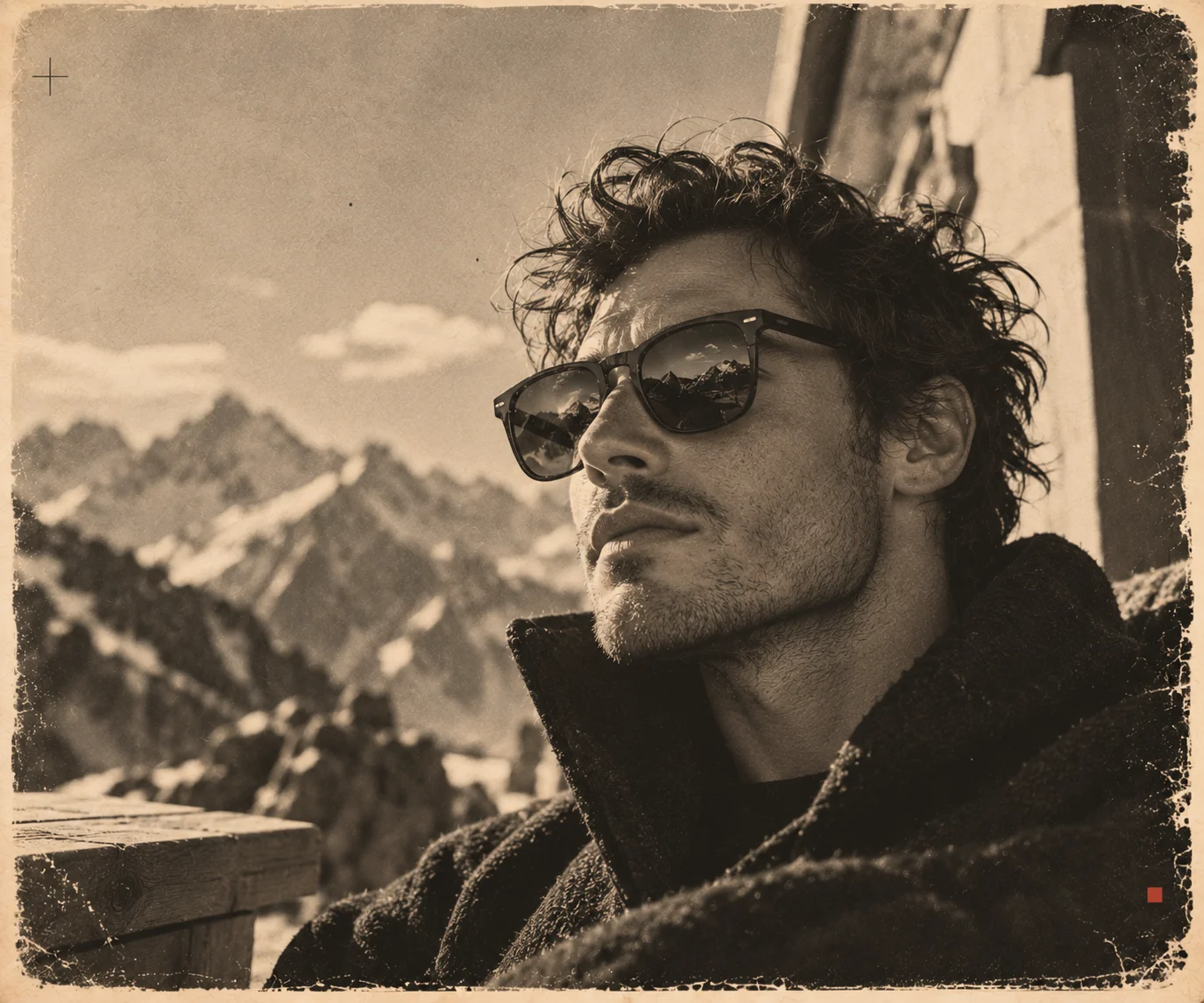
On the street, on a terrace or in the shade between houses, light changes with every step. In Sölden, altitude, snow and quick shifts between valley and mountain add to that. A tint that feels calm one moment can be too dark, too flat or too open the next.
That is why the choice doesn’t begin with a colour. It begins with the situations in which you want to see. Only then do we look at how lens and frame come together with your face, your line of sight and your movement. Sunglasses remain an object — but one that has to respond to light.
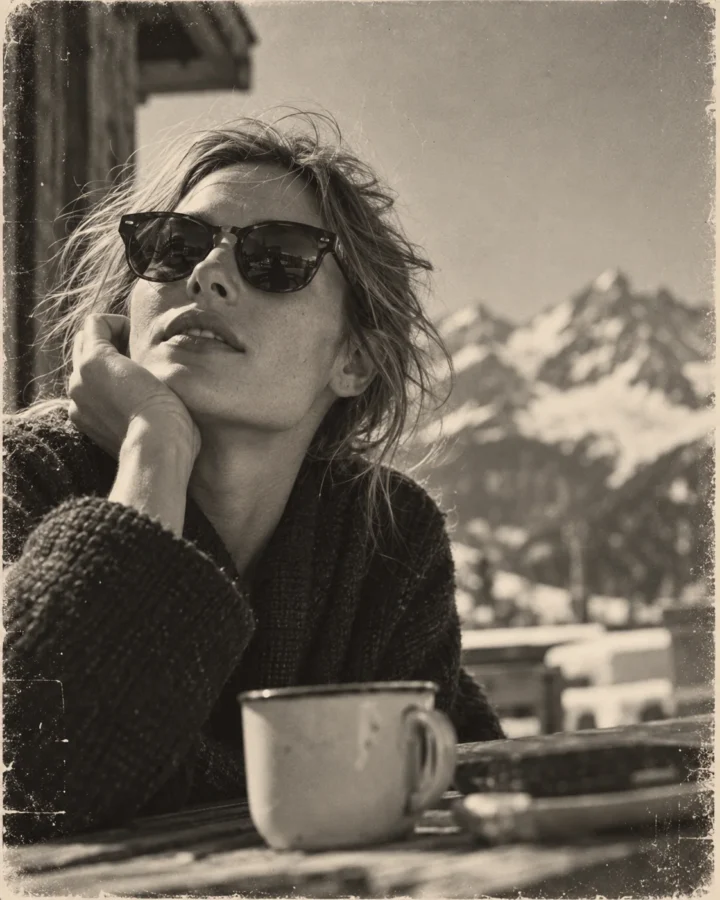
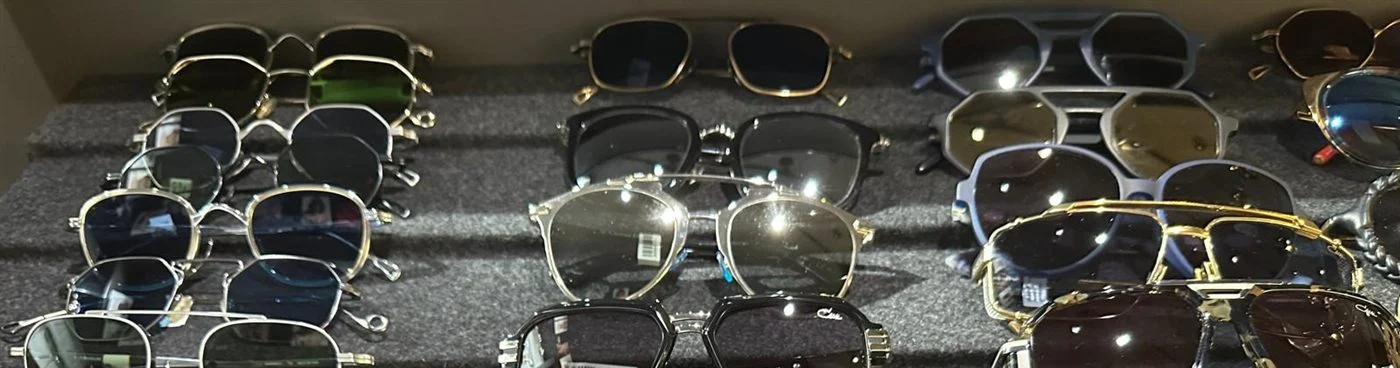
UV protection and visible darkness describe two different properties. The tint controls how much visible light reaches the eye and how glare is perceived. UV protection has to be reliably declared regardless of that. A dark lens on its own tells you nothing about it.
Shape contributes to visual comfort, too. Lens size, frame width and fit decide how much light comes in from above or from the side. What matters, then, is not the darkest possible option but the combination of documented protection, a suitable tint and a frame that sits steadily in the situation it is meant for.
Three tints. Three ways of reading light.
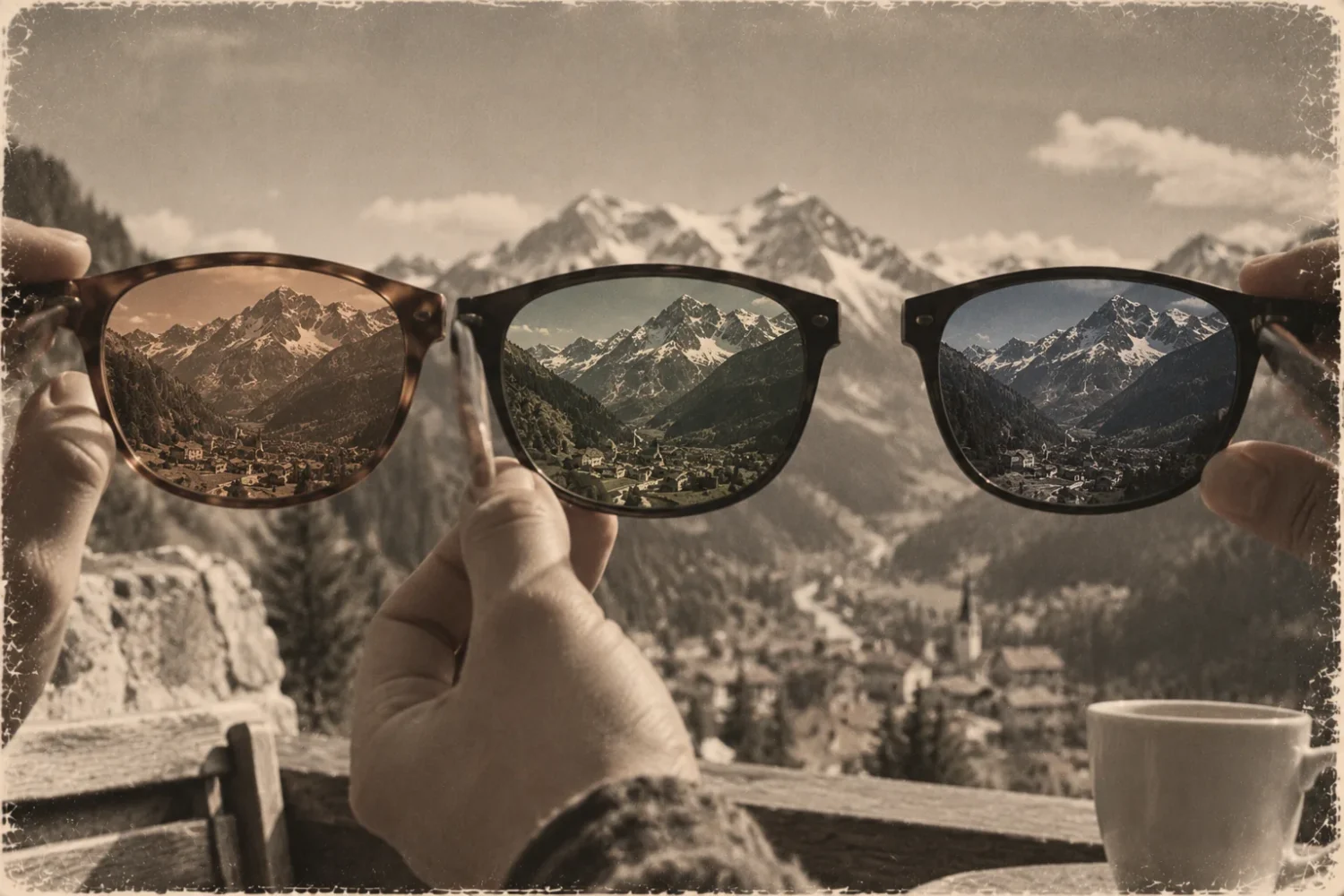
PROTECTION, PROPORTION, PERSPECTIVE.
Sunglasses don’t have to treat every situation the same way. Everyday life, movement, altitude and optical correction each ask different questions of tint, contrast, coverage and shape.
On the street, on a terrace or behind the wheel, what counts is a balanced tint that calms brightness, keeps colours true and stays comfortable for hours.
Movement brings wind, shifting shade and different lines of sight into play. Grip, coverage, ventilation and contrast become part of the same decision.
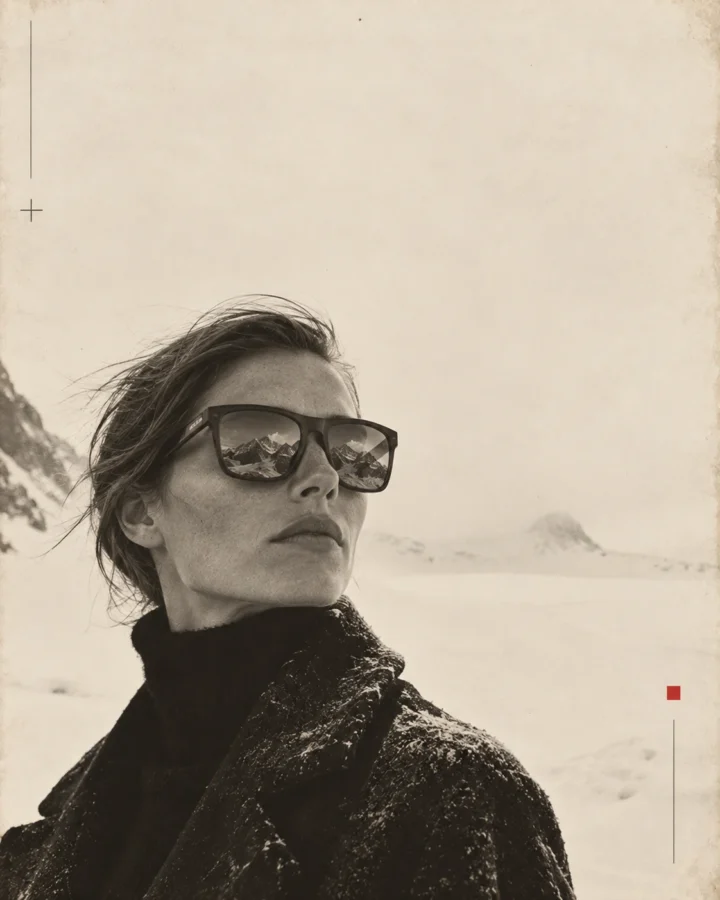
View sports solutionsAltitude, snow and light coming in from the side raise the demands. Tint and frame shape have to suit the route, the weather and the time spent outside.
Explore sports opticsCorrection and sun protection can be combined. What is possible depends on prescription values, lens size, frame shape, curvature and the field of vision you want.
Prescription sunglassesOne pair of sunglasses doesn’t have to cover every path. The choice often becomes clearer once the most important light situations are separated first.
Polarised lenses can reduce certain reflections on wet roads, water or snow. That can make your view calmer and let contours appear clearer. Polarisation, however, replaces neither declared UV protection nor a tint that suits the amount of light.
Displays, instruments or visors can look darker or altered through a polarising filter, depending on the angle. That is why we compare the effect with the devices and situations that really matter to you — rather than treating polarisation as an automatic upgrade.
Understand polarised lenses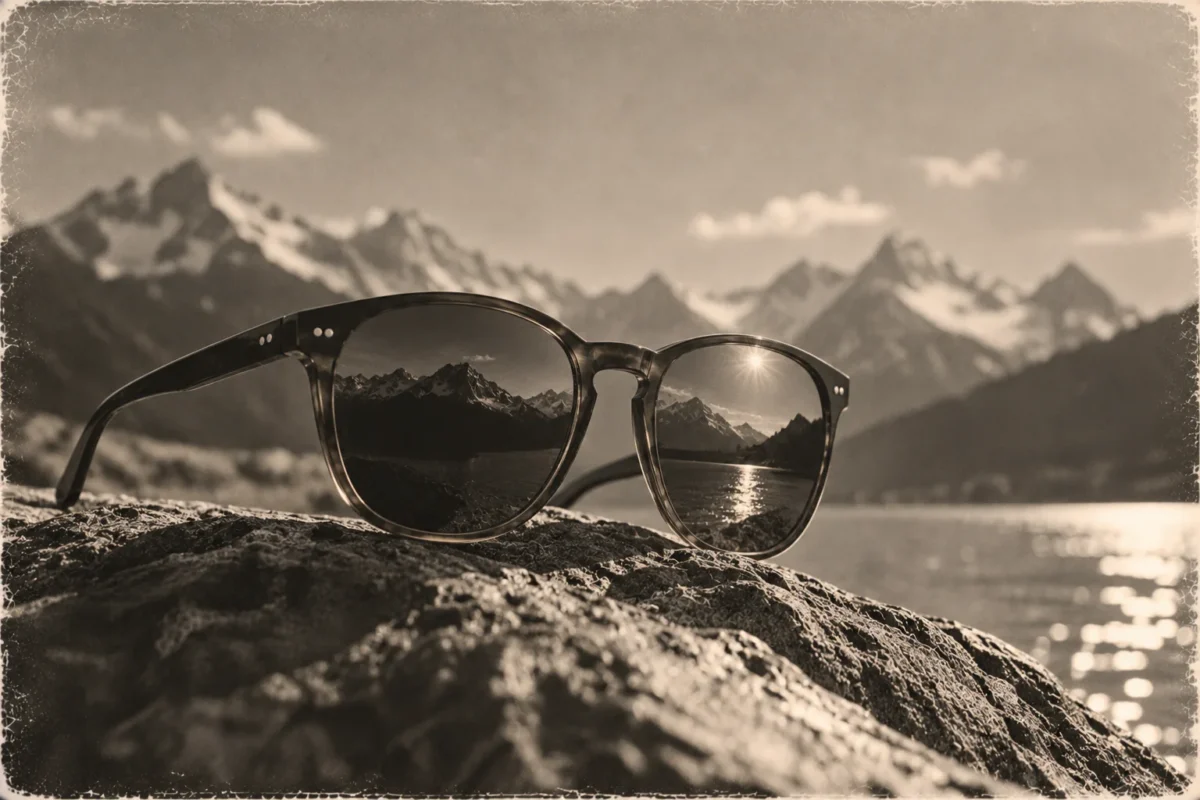
Look for UV protection that is clearly declared and traceable. The visible darkness of a lens is not a sufficient indication, so tint and UV protection should be assessed separately.
Polarised lenses can reduce distracting reflections on wet roads, water or snow. Whether they suit you also depends on the displays, instruments or visors you use.
Yes. Single-vision and progressive solutions are possible, depending on prescription values, lens size, frame shape and curvature. Frame and lenses should be planned together from the start.
There is no single best tint. Light intensity, snow, weather, route, your personal sensitivity to glare and the planned use decide together. Very dark tints can be unsuitable for driving.